
Divine Justice and Mercy
Paradise LostThis flow traces the poem's central tension between deserved punishment and gracious restoration.
increasing Bearing strength in each event
 decreasing
Bearing strength in each eventdecreasingJustice Required
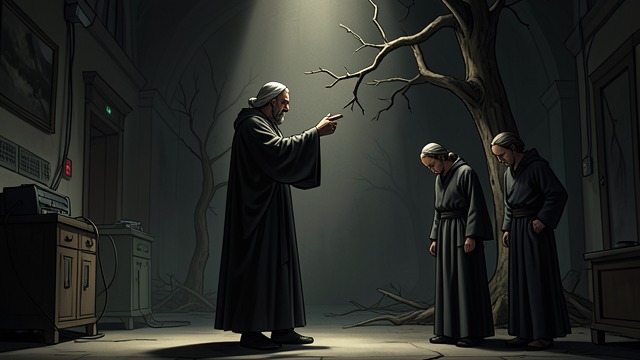
Justice Required
The command matters
God cannot treat the prohibition as a meaningless test after Adam and Eve violate it. Death, pain, labor, and exile express the moral seriousness of their freedom.
No arbitrary cruelty
The sentence is tied to the act and to the nature of the fallen condition. Justice explains why the world changes rather than merely announcing that it has changed.
Mercy Intercedes
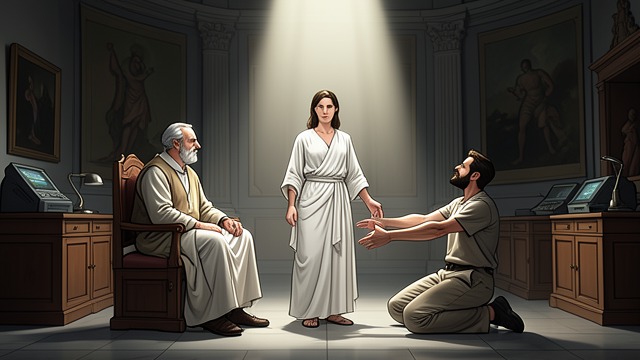
Mercy Intercedes
The Son speaks
The Son refuses to let humanity be lost without remedy and offers himself as mediator. Mercy takes initiative before fallen humanity can repair itself.
Justice preserved
The offer does not cancel judgment but fulfills its demand through substitution. Mercy is therefore shown as costly fidelity rather than indulgence.
Repentance Accepted
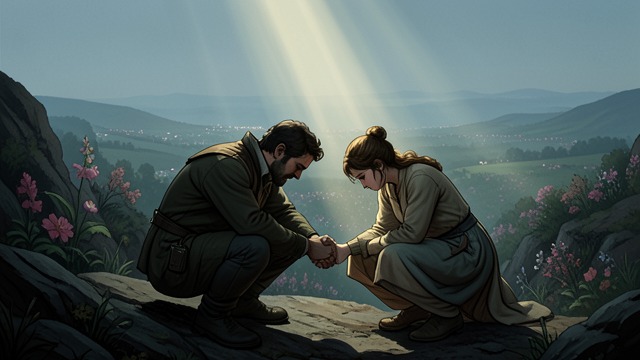
Repentance Accepted
Hearts softened
Prevenient grace enables Adam and Eve to confess rather than defend themselves. Their prayer rises because divine aid has already begun to restore their capacity for contrition.
Reconciliation opened
The Son presents their prayers before the Father, and their future is preserved. Acceptance does not return them to Eden but gives exile a redemptive direction.
History Judged

History Judged
Collective consequence
The visions show violence, disease, tyranny, idolatry, and the Flood as consequences of persistent corruption. Divine patience does not imply divine indifference.
Particular mercy
Noah, Abraham, and other faithful figures receive preservation within judgment. Mercy works through persons and covenants without declaring the surrounding evil harmless.
Grace Victorious
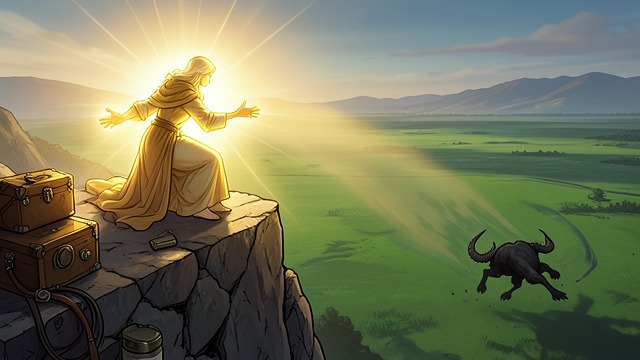
Grace Victorious
Judgment completed
The Son destroys the power of Satan and gathers the redeemed. The final order satisfies justice while displaying mercy as the deeper purpose of history.
A greater good
The renewed world surpasses the lost one because grace has transformed catastrophe into the setting for reconciliation. Divine goodness is vindicated through restoration rather than denial of evil.
during God's sentence after the Fall
during the Son's offer after the Fall
during Adam and Eve's prayer after judgment
during Michael's visions of human generations
at the final renewal of creation
